
Clinton County Court Records After Arrest
After a Clinton County jail arrest, two public record tracks may exist at the same time. The Clinton County Jail custody record is published through the sheriff roster, and the sheriff app shell identifies Sheriff Richard Kelly as the local sheriff. The roster can show the name, inmate ID, booking date, arrest date, arresting agency, physical descriptors, booking photo, and booking charge labels entered by the jail. The court record is different. It begins when a criminal case is filed and it tracks the formal charges, hearings, orders, bond conditions, disposition, and sentence. A booking charge is not the same as a filed court charge, and it is not a conviction.
The Clinton County Prosecutor decides whether to file formal charges after arrest. Indiana counties use prosecuting attorneys, not district attorneys. In routine state criminal cases, the filed case is searched through Indiana MyCase, also called Odyssey Public Access. The Indiana Judicial Branch Clinton County page points users toward MyCase for case information and some documents. If the custody question is still open, use the county roster and jail record path described in Clinton County jail inmate records. If the question is only about a booking photo, the public roster and photo request path are covered with Clinton County jail mugshots.
For court records after a jail arrest, the order matters: arrest leads to booking, booking creates a custody record, the prosecutor reviews the facts, and then a complaint, information, or indictment can open the court case. A case may not appear in MyCase the same hour the jail roster updates. Some arrests are released without formal charges. Some cases are filed later, amended, sealed, or restricted from public view.
Search Clinton County Court Records
MyCase is the main public search tool for Clinton County court records after an arrest. It is statewide, so a name search can return cases from other Indiana counties unless the search is narrowed. Start with the exact name spelling from the jail roster, then compare booking date, filing date, hearing date, charge text, and case type. The Indiana Judicial Branch public records page says some court documents and filings are available online at no cost, but documents that are not online must be requested from the clerk in the county where the case is being heard.
The MyCase screen and labels can change, but the research captured these common search fields for Clinton County court records after a jail arrest:
| Field Label | Type | Required | Options / Format Notes |
|---|---|---|---|
| Case Number | Text | Optional | Best when known; Indiana cause numbers include court, type, year, and sequence parts. |
| Party Name | Text | Optional | Search the defendant name; try last name, first name, and spelling variants. |
| Attorney | Text | Optional | Useful if counsel is already known from another record. |
| Citation Number | Text | Optional | Helpful for traffic or citation-based matters. |
| Court / County | Dropdown or filter | Optional | Select Clinton County when the portal permits county filtering. |
| Case Type | Dropdown or filter | Optional | Use criminal or infraction filters when they fit the arrest event. |
| Filing Date / Date Range | Date filter | Optional | Use the arrest or booking date as a clue, not as proof of the filing date. |
| Search / Reset | Buttons | Not applicable | Portal actions for running or clearing the query. |
Use the case detail page with care. MyCase warns that electronic case data is not the official court record. Official records come from the court that maintains the file. That warning matters when a printed certified copy, employer-required court proof, immigration matter, licensing issue, or attorney review is involved.
The screenshot in the project image manifest comes from the official Indiana MyCase public court-search portal, the statewide search channel used for Clinton County court records after an arrest.
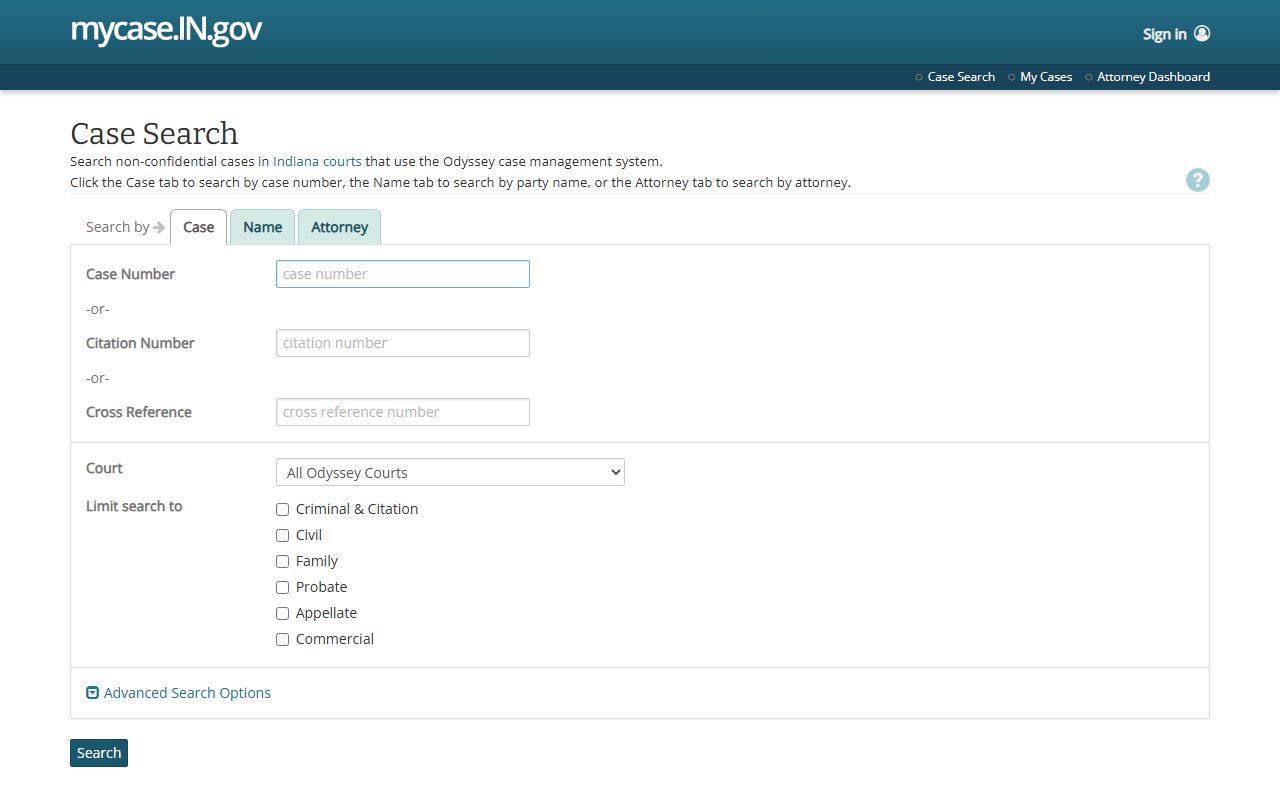
That portal is the court side of the lookup. It does not replace the jail roster, and it does not publish Clinton County booking photos.
Clinton County Arrest to Court Case
The practical flow is short, but each step is run by a different office. Law enforcement makes an arrest or serves a warrant. The Clinton County Jail books the person and enters custody data. The prosecutor then decides whether to file formal charges. If charges are filed, the case appears in the court system and can be searched in MyCase when public access allows it. The court then handles the initial hearing, bond, later hearings, plea, trial, dismissal, or sentence.
- Confirm the jail booking date, arresting agency, and booking charge labels from the sheriff roster or jail contact channel.
- Search MyCase by party name and, when possible, narrow the search to Clinton County.
- Compare the booking date to the case filing date and first scheduled hearing.
- Open likely criminal cases and read the charge list, class or level, case status, bond orders, hearings, and disposition.
- If no case appears, try spelling variants, middle names, broader statewide search, and later filing dates.
- For copies not online, use the clerk fallback through the county where the case is pending.
An initial hearing is the first court appearance where rights, charges, and release conditions may be addressed. Indiana law on initial hearings after arrest is found in IC 35-33-7-1. The jail does not decide the filed criminal charge, and the roster charge can be broader, shorter, or different from the prosecutor's final filing language.
Clinton County Charging Records After Arrest
Formal Clinton County court records after a jail arrest are created through charging documents. The terms can sound technical, but the key question is simple: what document put the accusation into court? In Indiana state practice, many cases are filed by a prosecutor through an information or complaint. An indictment is tied to grand jury action and is less common for routine local cases. The charge filing is the court record to read when the roster only gives a booking category such as warrant service or a plain charge label.
| Document | Who Files or Returns It | What It Does | What to Check |
|---|---|---|---|
| Complaint | Officer or prosecutor, depending on case practice | States the alleged offense and starts or supports the criminal case. | Name, offense date, statute or charge text, and whether it matches the arrest event. |
| Information | Prosecutor | Sets out the formal charge chosen by the prosecuting attorney. | Charge level, count number, amendments, and any later reduction or dismissal. |
| Indictment | Grand jury | Accuses a person after grand jury review and can open a criminal case. | Counts, offense date range, and any bond or warrant order tied to the filing. |
The prosecutor role is important because a person can be arrested on one suspected offense and later be charged with a different count, a lower level, an added count, or no count at all. That is why Clinton County court records after an arrest should be checked in the case system, not only in the jail feed.
Clinton County Arrest Charge Records
Charge status shows where the case stands. A pending charge is only an accusation. An amended charge means the prosecutor or court record changed the filed charge text or level. A dismissed charge ended without a conviction on that count. A conviction means guilt was entered by plea or finding. The public should not treat an arrest, booking, filed charge, and conviction as the same thing.
| Status | Plain Meaning | Why It Matters |
|---|---|---|
| Pending | The charge has been filed and remains unresolved. | Hearings, bond terms, and court orders may still change. |
| Amended | The filed charge language or level changed after the first filing. | The final charge may differ from the booking entry. |
| Reduced | The offense level or charge was moved downward. | A reduced charge can change penalties, plea terms, and record meaning. |
| Dismissed | The charge ended without a conviction on that count. | Dismissal is not the same as expungement or sealing. |
| Conviction | Guilt was entered by plea or court finding. | The record now reflects an adjudicated outcome, not just an accusation. |
| Disposition | The final result of a charge or case. | Disposition is the key field for what ultimately happened. |
When Clinton County court records after arrest show several counts, read each count on its own. One count can be dismissed while another is reduced or results in conviction. The docket history may also show failure-to-appear events, warrant orders, bond changes, or sentencing entries.
Clinton County Bond Records After Arrest
Bond is handled through the court process, while the jail handles custody and release after valid paperwork and payment rules are met. Indiana bail law is found in IC 35-33-8. The Clinton County roster samples reviewed did not show bond amounts or bond types, so court records and jail or clerk confirmation are the better sources for case-specific bond orders. Do not rely on old payment instructions found outside the current official pages.
| Bond Type | How It Works | Clinton County Checkpoint |
|---|---|---|
| Cash bond | Money is paid directly to satisfy the court's release order. | Confirm amount, payee, hours, and accepted methods with the jail or clerk. |
| Surety bond | A licensed bail agent posts bond, often with a fee or collateral. | Agent fees are separate from any court refund rules. |
| Personal recognizance | The person is released on a written promise and court conditions. | Check MyCase for release conditions and hearing dates. |
| No-bond hold | A judge or legal condition prevents release by payment. | Payment alone will not release the person. |
| Detainer or hold | Another agency, case, warrant, ICE matter, DOC/parole issue, or county may require custody. | A Clinton County bond may not clear all custody barriers. |
To verify bond, confirm custody with Clinton County Jail, search MyCase for the filed case and bond order, and ask the jail or clerk whether any holds remain. A detainer is a request or legal hold from another agency. It can keep a person in custody even when the local bond question appears resolved.
Clinton County Warrant Court Records
A warrant can be the event that leads to a Clinton County jail arrest, and it can also appear later in the court case if a person misses a hearing. The sheriff website and app include a Most Wanted/Warrants feature, but the inspected official JSON content only had a placeholder and no active entries. That means there was no confirmed live public Clinton County warrant list in the sheriff app at the time of research.
Use a channel chain for warrant-related records. The Clinton County Sheriff's Office inmate search may show "Warrant Service" as a booking charge or category. MyCase may show court warrant events, failure-to-appear entries, or related docket text when public. The sheriff's Most Wanted/Warrants feature had no active entries in the inspected feed. The jail information phone line can confirm custody status. For non-online records, the sheriff's Request for Public Records PDF is the documented local fallback, subject to Indiana law enforcement disclosure limits.
Note: Do not use warrant records to avoid court. Confirm the court date, clerk instructions, and counsel options instead.
Clinton County Arrest Charges vs Convictions
Clinton County court records after an arrest can show a charge even when the case has not reached final judgment. A charge is an accusation selected for the case. A conviction is the result of a plea or finding of guilt. The difference is central when reading a case record, checking a background issue, or trying to understand why a jail booking entry and court docket do not match.
| Point of Comparison | Charge | Conviction |
|---|---|---|
| Stage | Accusation in a filed case. | Final or adjudicated outcome on a count. |
| Proof Level | Based on charging review and probable cause standards. | Based on plea, trial finding, or other adjudication. |
| Where It Appears | Complaint, information, indictment, docket, and MyCase charge list. | Disposition, sentencing entry, judgment, or final case record. |
| Can It Change? | Yes. It may be amended, reduced, added, or dismissed. | It can be appealed, corrected, or later restricted if eligible. |
A booking photo or arrest entry should never be read as proof of guilt. The filed court record gives the formal charge path, and the disposition gives the outcome.
Clinton County Sealed Court Records
Some Clinton County court records after arrest may be restricted from public access. Indiana's expungement chapter, IC 35-38-9, provides a process for sealing or restricting qualifying arrest and conviction records. Expungement does not mean every old copy on the internet disappears, and it does not turn a public roster entry into legal advice. It is a court process with eligibility rules.
| Point of Comparison | Sealed | Expunged |
|---|---|---|
| Public Visibility | Hidden or restricted from ordinary public access. | Restricted under Indiana expungement rules when a court grants relief. |
| Record Existence | The record still exists but is not broadly public. | The record is treated under the statute's relief rules, not simply erased from all systems. |
| Who May See It | Access can remain for courts, law enforcement, or other authorized users. | Access depends on the statute, case type, and court order. |
| Typical Trigger | Juvenile, protected, sealed, or restricted case status. | Eligible dismissal, arrest, conviction, or waiting-period relief under Indiana law. |
Juvenile records, sealed charges, some dismissed matters, protected personal information, and investigatory records can be withheld or limited. Indiana's Access to Public Records Act, IC 5-14-3, gives a broad public-record framework, while IC 5-14-3-5 addresses basic law enforcement daily log and arrest information. Both laws still allow restrictions for records the law protects.
Clinton County Clerk Court Records
MyCase is the starting point, not the final word. The Indiana courts public records page says that if a document is not online, the person must contact the clerk in the county where the case is being heard. For Clinton County court records after an arrest, that means using the official Clinton County court path and the clerk's process for copies, certification, and documents not posted to MyCase.
The local court screenshot in the project image manifest comes from the official Indiana Judicial Branch Clinton County page, which links the county court resource path, e-filing information, MyCase, and public court statistics.
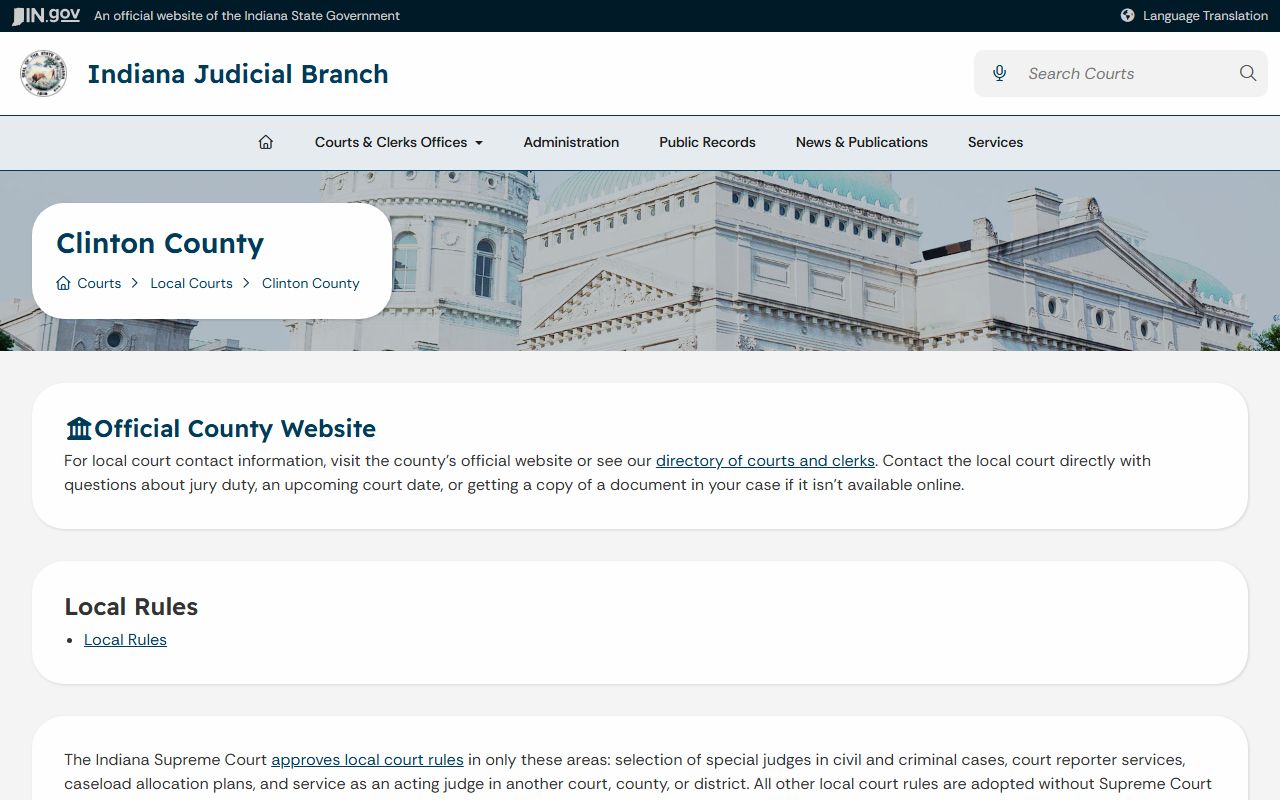
Use that court path when MyCase shows a case but the filing, order, or certified record is not available online.
Important: Informational court and custody lookups are not FCRA consumer reports and may not be used for FCRA-covered decisions.